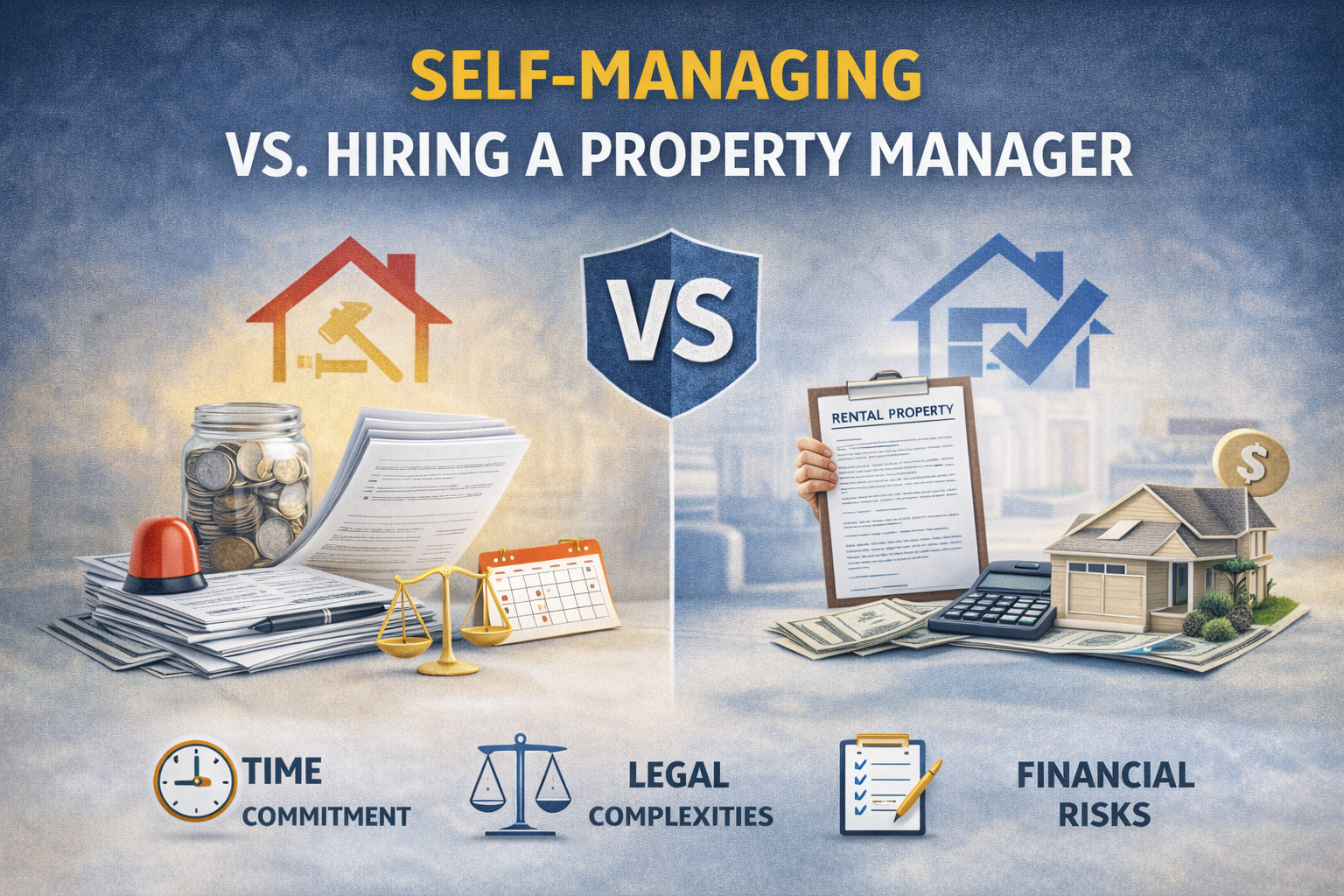
Self-Managing vs. Hiring a Property Manager: What Homeowners Should Know
Key Points to Consider
Self-managing landlords are held to the same legal standards as professional property managers.
Rental laws require strict compliance with security deposits, lease terms, fair housing rules, and maintenance timelines.
Managing a rental property demands significant time, knowledge, and patience.
Homeowners sometimes decide to convert a primary residence into a rental property—often due to favorable interest rates, changing life circumstances, or the appeal of long-term investment income.
Once that decision is made, the next critical question follows:
Should you self-manage the property or hire a professional property manager?
There is no universal right or wrong answer. Some owners successfully self-manage, while others benefit greatly from professional oversight. The best choice depends on your experience, availability, and comfort with legal and operational responsibilities.
Below are key factors Hive Group Realty recommends evaluating before deciding.
Do the Same Laws Apply to Self-Managing Owners?
Yes.
A common misconception is that rental laws apply only to professional property management companies. In reality, federal, state, and local regulations apply equally to all landlords, regardless of whether they self-manage or use a third-party manager.
This includes compliance with:
Fair housing laws
Applicant screening standards
Lease requirements
Security deposit handling
Maintenance and habitability obligations
Failing to comply—even unintentionally—can expose owners to fines, lawsuits, and costly disputes.
Key Legal Requirements All Landlords Must Follow
Whether self-managing or working with a property manager, landlords must comply with several core legal obligations, including:
Security Deposit Rules
Most jurisdictions regulate how much can be collected, how deposits must be held, and when they must be returned. Improper handling is one of the most common sources of landlord-tenant disputes.
Fair Housing & Applicant Screening
Landlords must follow fair housing laws when advertising, screening applicants, and responding to accommodation requests, including those related to disabilities or assistance animals.
Lease Agreements Must Be Compliant
Generic or outdated lease templates found online may not meet current legal standards. Required disclosures, prohibited clauses, and language requirements vary by jurisdiction and change over time.
Maintenance & Habitability Timelines
Landlords are legally required to address habitability-related repairs within defined timeframes. Delays can result in tenant remedies, rent withholding, or legal liability.
Source of Income Protections
In many areas, landlords must accept lawful sources of income—such as housing vouchers—and cannot deny applicants solely based on how rent is paid.
Three Questions to Ask Before Self-Managing
If you’re considering managing your rental yourself, ask these three important questions:
1. Do I Have the Knowledge?
Successful self-management requires a strong understanding of landlord-tenant laws, fair housing rules, and proper documentation. Even well-intentioned mistakes can lead to serious legal consequences.
2. Do I Have the Temperament?
Rental management often involves difficult conversations, late payments, maintenance disputes, and emotionally charged situations. Remaining professional, objective, and consistent is essential.
3. Do I Have the Time?
Managing a rental property is not passive. It involves:
Marketing and showings
Applicant screening
Lease administration
Maintenance coordination
Emergency response—often after hours
Tenants expect timely communication and action, regardless of weekends or holidays.
Making the Right Decision
While self-managing can reduce management fees, it comes with legal exposure, time demands, and operational responsibility. Professional property management provides expertise, compliance oversight, and peace of mind—allowing owners to focus on their personal and financial goals.
At Hive Group Realty, we believe property management works best when it’s handled with integrity, transparency, and accountability. It’s not just about managing homes—it’s about building strong relationships between owners, tenants, and our team.
If you’re weighing whether to self-manage or hire a professional, we’re happy to help you evaluate your options and determine the best path forward for your property.
Reach out to Hive Group Realty to learn how professional property management can protect your investment and simplify ownership.